Dr. Pamela Cooper, M.A., MBA, PhD.
Educational Diagnostician
Common Adolescent Mental Health Challenges
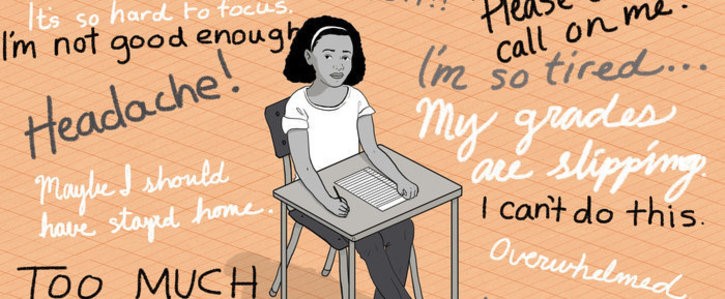
Adolescence is a transformative, challenging period filled with expectations, hurdles, and unique experiences. Social media influences, mental health disorders, physical health issues, peer and parent pressures, school demands, and just plain trying to understand their own individualized self-shouts why parents, educators, and the adolescents themselves need to understand and recognize these common conditions. Teachers are under pressure to help students make up for academics not learned during the pandemic, and children feel increased stress, resulting in a pronounced rise in students expressing anger or sadness by lashing out and being disruptive or non-compliant at school.
Adolescent mental health problems continues to worsen, post the COVID-19 pandemic and is co-occurrent with other health and behavioral risks, i.e., increased risk of drug use, experiencing violence, disability diagnosis, learning disabilities, and higher risk sexual behaviors that can lead to HIV, STDs and unintended pregnancy. Centers for Disease Control and Prevention (CDC) report that 4 in 10 students report persistent feelings of sadness or hopelessness, 2 out of 10 students report serious attempting suicide and 1 in 10 attempted suicides. Understanding helps adolescents develop better mental health behaviors and habits.
Three years after schools across the nation were shuttered because of COVID-19, educators report struggling to teach students skills lost out on during remote learning while managing a surge in post-pandemic disorders and misbehavior. More than 70% of 1,000 educators reported in a recent national survey that students are misbehaving more now than they did before the 2019 pandemic. The spike in outbursts, disrespect, fidgeting, processing delays, and nonstop chatter in classrooms coincides with a national mental health crisis, called a national emergency by American pediatricians during the pandemic. A recent survey from the Pew Research Center found 40% of parents with children under 18 said they are “extremely or very worried that their children are struggling with anxiety or depression.” Many children lost loved ones to COVID, saw their parents lose jobs and witnessed or experienced abuse. Remote schooling led to children spending countless hours in front of their screens in isolation from teachers and friends.

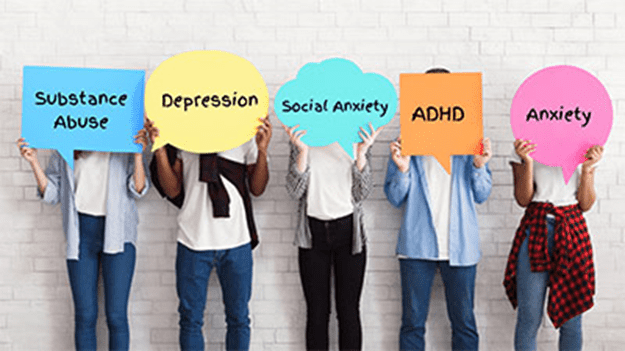
Mental health disorders affect thoughts, moods, behaviors, and physical health resulting from a poor diet, Environment, grief, Parentization, abuse (substance/physical), abandonment, and/or individualized disorder, and require professional intervention, temporary or long-term care. These are common adolescent mental health disorders and related symptoms. This list of mental disorders is not all-inclusive.
Anxiety, one of the most prevalent mental illnesses in the U.S., affecting 40 million individuals. Schools are experiencing an increase in students diagnosed with anxiety disorder (medicated and/or not medicated):
- Generalized anxiety disorder (GAD), characterized by excessive stress and worry. Symptoms include racing thoughts, feelings of restlessness, difficulty concentrating, irritability, difficulty sleeping and muscle tension.
- Panic disorder symptoms include heart palpitations, a racing heart, sweating, shaking, and feeling out of control.
- Social anxiety disorder is struggling with near-constant fears of being judged by others and/or embarrassing themselves in front of others. This disorder may cause avoidance of social interaction and school.
- Separation Anxiety Disorder (SAD) is an anxiety disorder in which an adolescent experiences excessive anxiety regarding separation from home, people to whom the adolescent has a strong emotional attachment (e.g., a parent, caregiver, pet, comfort object, and/or sibling), places, and/or sensory integration objects. Separation anxiety is a natural part of the developmental process when not in excess. Adolescents with SAD may also experience panic attacks related to fears of separation.
- Specific phobias are intense fears related to specific things or situations. Arachnophobia (fear of spiders), acrophobia (fear of heights) and mysophobia (fear of germs) are common phobias.
Depression is another psychiatric disorder. Approximately 17.3 million individuals in the United States suffer from major depressive disorder, while about 1.9 million children struggle with diagnosed depression. Like anxiety, depression is an umbrella term that includes multiple disorders, like:
- Major depressive disorder, a mood disorder. Adolescents may experience a single episode of depression or multiple episodes. The symptoms of depression include feeling sad, lonely, and hopeless and losing interest in once pleasurable activities. Depression can also cause physical symptoms as a lack of appetite, lack of energy, headache, Muscle and/or back pain.
- Persistent depressive disorder, also referred to as dysthymia, is a chronic condition with symptoms like major depressive disorder.
- Postpartum depression when a women’s bodies undergo significant changes during and after pregnancy. Following the birth of a child, one in nine women develop postpartum depression.
- Seasonal affective disorder is a type of depression happening two seasons of the year when the brain chemical changes due to time change, shorter days, less sunlight, allergy increase, air quality changes, weather changes. Fall-onset, winter depression begins in the late fall to early winter months, easing during summer months. Spring-onset, summer depression. Common symptom: Increased sleep and daytime drowsiness, Loss of interest and pleasure in activities formerly enjoyed, Social withdrawal and increased sensitivity to rejection, Grouchiness and anxiety, Feelings of guilt and hopelessness, Excessive tiredness (fatigue), Decreased sex drive, Decreased ability to focus, Trouble thinking clearly, Increased appetite, especially for sweets and carbohydrates, Weight gain, and/or Physical problems, such as headaches
Symptoms tend to come back and then improve at about the same times every year.
- Mood disorder, living with more persistent and severe symptoms that can disrupt daily lives, i.e., an ongoing feeling of sadness, hopelessness, low self-esteem, excessive guilt, energy level shifts.
Bipolar Disorder typically manifests in the late adolescent years but can emerge in early adolescent and/or later in life, also referred to as manic depression. Those with Bipolar disorder experience extreme changes in mood that cycle back and forth. When experiencing a manic period, an individual may feel extremely confident and energized, may behave impulsively and recklessly, or experience depressive periods feeling sad, hopeless and without energy. It is common to cycle between extreme moods with periods of stability in between.

Post-traumatic stress disorder (PTSD) results from a triggering, traumatic event. Anyone can get PTSD if they experience trauma for longer than a month following the initial trauma, but symptoms can also emerge months or even years later. Side effects of PTSD include:
- Intense recollections of the traumatic event or events in the form of flashbacks or nightmares
- Difficulty concentrating and sleeping.
- Agitation, restlessness and feeling jumpy.
- Avoiding reminders of the trauma
Obsessive-Compulsive Disorder (OCD), obsessive thoughts and mental images that cause anxiety. About a third of individuals diagnosed with OCD initially experience symptoms during childhood. Obsessive cleanliness is often a symptom of OCD but can manifest differently in adolescents. It is entirely possible to recognize these obsessive thoughts as counterproductive but still struggle to control them. Typical obsessive thoughts include fear of losing belongings, fear of contamination, and intrusive thoughts of specific words and images. Compulsions can be a symptom, feeling compelled to act out repetitive behaviors to allay anxiety related to obsessive thoughts, i.e., behaviors of handwashing, getting up to sharpen a pencil, closing a door, or feeling the need to arrange things in a certain way.
Co-occurrence of Obsessive-Compulsive Disorder and TIC Disorder, While OCD and tics are distinct conditions, they share similarities and often co-occur. Both involve repetitive behaviors that can be difficult to control, and both can significantly impact an adolescent’s daily functioning. However, there are key differences:
–OCD behaviors are typically driven by obsessive thoughts and performed to reduce anxiety, while tics are generally not preceded by obsessions and may be accompanied by a physical urge.
– OCD compulsions are often complex and ritualistic, while tics tend to be simpler and more sudden.
– Individuals with OCD are usually aware that their obsessions are irrational, while those with tics may not perceive their tics as abnormal until pointed out by others.
Studies suggest the comorbidity rates between OCD and tic disorders are that up to 30% of adolescents with OCD also have a tic disorder, and conversely, up to 60% of adolescents with Tourette Syndrome may develop OCD symptoms. This high rate of co-occurrence suggests shared neurological factors, involving the basal ganglia and related circuits in the brain.
Eating disorders are more than an individual’s relationship with food requiring intervention from medical and/or psychological experts. Eating disorders cause unhealthy eating habits to develop, as an obsession with food, body weight or body shape. In severe cases, eating disorders can have serious health consequences and can result in death, left untreated. Common symptoms include severe restriction of food, food binges or purging behaviors, such as vomiting or over-exercising. The most common types of eating disorders include:
- Anorexia Nervosa: An eating disorder that causes individuals suffering with it to obsess about their weight and the food consumed, often leading to low body weight.
- Bulimia Nervosa: Characterized by vomiting after eating meals to control one’s weight.
- Binge Eating Disorder: Frequently overeating to the point of discomfort, to deal with intense or uncomfortable feelings.
Attention Deficit/Hyperactivity Disorder (AD/HD) is a neurodevelopmental disorder characterized by patterns of inattention, hyperactivity, and impulsivity. Symptoms often emerge in childhood and can persist in adolescence and adulthood. Common signs include difficulty focusing, forgetfulness, restlessness, and trouble completing tasks. AD/HD in adolescents can manifest in ways, impacting their academic, social, and emotional lives. Here are common Adolescent AD/HD experiences:
- Inattention and Disorganization: Adolescents with AD/HD have difficulties staying focused on tasks, are easily distracted, and frequently lose things or place when reading. They struggle with organizing schoolwork, managing time, and completing assignments.
- Hyperactivity, restlessness, and an inability to sit still for extended periods are common signs of hyperactivity. The adolescent might fidget, tap, or constantly move, even in situations that require calmness.
- Impulsivity, acting without thinking, interrupting others, and having difficulty waiting their turn are typical impulsive behavior’s. An adolescent with AD/HD might make hasty decisions that can lead to trouble in social and academic settings.
- Academic challenges can result in lower grades due to missed assignments, careless mistakes, and difficulty following instructions. Despite being intelligent and creative, adolescents with AD/HD may underachieve academically.
- Social difficulties maintaining friendships can be challenging for adolescents with AD/HD due to their impulsive behavior and inattentiveness. They may face conflicts with family, peers, and authority figures.
Autism Spectrum Disorder (ASD) is a broad range of conditions affecting social communication, behavior, and sensory processing. According to the CDC, New Jersey now has the third highest rate of autism in the U.S.: 1 in 35, 8-year-old children and 1 in 51, 4-year-old children have autism spectrum disorder. Symptoms vary widely, most challenges included are social interactions, repetitive routines, specific behaviors, and interests. Autism is described as a “spectrum” because the severity and combination of symptoms can differ significantly from person to person. Autism in adolescents presents unique challenges and experiences:
- Social communication difficulties: Adolescents diagnosed with autism often have trouble understanding social cues, body language, and tone of voice. These difficulties can make it challenging to engage in reciprocal communication, leading to struggles in making and maintaining friendships. The adolescent might find it difficult to interpret others’ emotions and respond appropriately, which can result in social isolation or miscommunication.
- Repetitive behaviors and specific interests: Adolescents with autism engage in repetitive movements or speech patterns, such as hand-flapping, rocking, or repeating phrases. Repetitive movements often have intense focus on specific subjects or hobbies, which can be a strength, when channeled positively. Repetitive movements might dominate their time and conversations but can provide a sense of joy and achievement.
- Sensory sensitivities: Sensory sensitivities are common among adolescents with autism. The adolescent may be over- or under-reactive to sensory stimuli such as lights, sounds, textures, or smells. These stimuli can lead to sensory overload, especially in busy or chaotic environments, causing significant discomfort or distress. Find ways to manage sensory sensitivities for managing well-being.
- Routine and predictability: A strong preference for routines and predictability is typical. Adolescents with autism may have difficulty adapting to changes or new situations, which can cause anxiety and distress when routines are disrupted. Consistency and clear expectations may help the adolescent feel more secure and manage transitions more effectively.
- Academic and cognitive profiles: The academic performance of adolescents with autism can be highly varied and specifics as math, music, science, or art, demonstrating exceptional skills and talents. However, the adolescents might also have learning differences that require specialized teaching approaches. Understanding unique cognitive profiles is important for providing appropriate educational support focused on specific strengths.

Dyslexia, the number one learning disability that affects people of all ages. It affects a person’s reading and language processing skills. Some symptoms of dyslexia include:
- Reversing the position of letters, numbers, or symbols.
- Difficulty with phonological awareness.
- Struggling with reading comprehension.
- Delayed speech.
- Difficulty learning new vocabulary or rhymes.
- Visual and/or auditory processing delays.
- Difficulty spelling, copying, proofreading, tracking.
Dyscalculia, a learning disability that affects math skills. Dyscalculia can make it difficult for an adolescent to understand math concepts, perform arithmetic calculations, and solve math problems. With practice, adolescents that dislike math can understand and perform math. Dyscalculia makes it challenging to understand even the most basic math concepts. Math builds upon itself, adolescents with dyscalculia can fall behind and struggle to catch up for years. Adolescents with dyscalculia struggle understanding math concepts, difficulty with basic arithmetic operations (such as addition, subtraction, multiplication, and division), and difficulty with more complex math skills (such as algebra and geometry). Common symptoms include:
- Struggling with mathematical concepts such as measuring, time, charting, reading a map, following directions, and estimating
- Being unsure of how to do basic math problems (addition, subtraction).
- Difficulty following the order of operations.
- Find it challenging to count and group numbers together.
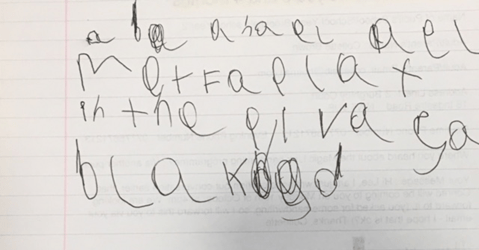
Dysgraphia, a learning disability that affects a person’s ability to write. It can manifest as difficulty with spelling, poor handwriting, or trouble putting thoughts on paper. Dysgraphia can be caused by a variety of factors, including neurological conditions, developmental delays, and/or difficulty with fine motor skills. Symptoms of dysgraphia may include:
- Difficulty with written expression
- Messy handwriting
- Taking a long time to write
- Struggling to express thoughts in a clear sentence structure
- Poor grammar
- Problems organizing thoughts and ideas in writing,
- Difficulties organizing pages, chapters, books.
Dyspraxia, a neurological disorder affecting an adolescents ability to plan and coordinate movement. Dyspraxia affects fine motor skills such as writing or tying shoelaces, gross motor skills as balance and coordination, and the ability to process information and perform tasks in the correct order. Dyspraxia is often referred to as developmental coordination disorder (DCD) and is thought to be caused by problems with the brain’s ability to process information about movement and coordination. Dyspraxia can be diagnosed through a combination of medical and educational assessments. Treatment may involve physical therapy, occupational therapy, and specialized education services. Although dyspraxia is a condition that affects motor skills, it has the potential to hinder specific learning, symptoms include poor balance and struggling with fine-motor tasks.
Auditory and visual processing disorders are neurological conditions that can cause difficulty in processing information from sound (information received through auditory) and sight (information received through vision). This can be caused by a brain injury, such as a concussion, closed-head injury, chemical exposure during pregnancy, physical abuse, or it may be due to a genetic disorder. These issues can make it difficult learning when reading and/or writing, decerning sounds of letters or words written or spoken, understanding math concepts such as ratios and percentages, tracking when reading, processing information without long pauses or delays. Auditory-processing difficulties are often misdiagnosed as ADHD because they both involve poor attention, lack of focus, and the need for information to be repeated, restated and checked for understanding.
Executive functioning issues (poor planning and prioritization), a term used to describe a range of difficulties with mental skills that help the adolescent to plan, focus attention, remember instructions, and multitask. These skills are important for organizing, prioritizing, and completing tasks, as well as regulating emotions and behaviors. Poor executive functioning can affect the ability to perform well in school, at home, and other areas of life. Planning and prioritization are important for schoolwork, life in general, relationships, and health. Poor planning leads to missed deadlines, forgotten assignments, unfinished tasks, and deficient performance at home or school. Poor prioritization leads to the inability to choose between competing activities or tasks that need to be completed first. Adolescents with executive functioning issues may have difficulty determining which assignments take precedence over others when due dates approach simultaneously. Executive functioning can create problems when too many people are seeking adolescents’ attention at once.

Schools provide critical support and services, school counseling, child study team services, section 504 plan services, mental health education, academic support, behavior support, nursing support. These supports Implement strategies and approaches that can help prevent mental health problems and promote positive behavior and mental health of students, help students cope with emergencies and their aftermath, and provide a safe and supportive environments (whether in person or virtually). Supports include:
- Linking students to mental health services.
- Integrating social emotional learning.
- Training staff.
- Supporting staff mental health.
- Reviewing discipline policies to ensure equity.
- Building safe and supportive environments.
Parents and families support:
- Communicate openly and honestly, respecting individuality and their values.
- Supervise adolescents to facilitate healthy decision-making.
- Spend time, enjoying shared activities.
- Volunteer and become engaged in school activities, support and help with homework.
- Communicate regularly with teachers, support staff, and administrators.
- Adolescents need to know that someone cares about them.
Key take-away – An adolescent with an identified mental health challenge is fragile, wanting approval, needing acceptance and love, seeking security and protection, learning and absorbing, living the best way known, and capable. Mental health challenges are a glitch and not a label of identification. Think, is there anyone without any sort or form of glitch? How would you feel if someone address you as, ‘Hi Adjustment Disorder” or by your name knowing that you are a thinking and feeling human being with a name and just happen to have a mental health issue. Let us remember to be mindful and seek clarification, alignment and not judgment.
 Family Learning Center
Leave a comment